Leadership | 02.15.21
Succession Planning and Your Career as an MSP
By Heidi M. Thompson, MBA, CPMSM, CPCS, FMSP
Succession planning begins with development of the associates on your team. Development plans can be formal or informal but as a leader, development of my teams has been a very natural process. As medical services professionals, encouraging team members to set goals toward certification is a common and very tangible progression in their career. This development also enhances the expertise of team members which, in turn, raises the bar of professionalism. Discuss with your team members their professional goals and aspirations and then provide them with tools to help them meet those goals and progress in their careers.
In all situations, leaders must document processes so that should an untoward event such as sudden illness or death occur, others will be able to ascertain the processes and procedures to continue the work. This type of succession planning essentially provides the framework so that others will be successful, and the organization will not suffer appreciably. Leaders have a responsibility to also communicate regularly and as transparently as possible to ensure that the associates on their teams are well informed and have the information necessary to perform delegated tasks as well as to carry forward if there is a sudden absence. Knowledge is powerful only if shared.
A formal succession planning process requires the incumbent to identify potential successors, assess their potential and current performance, as well as their current readiness. Once potential successors have been identified, the current leader must meet with them to determine if succession to the role is something they wish to pursue. During this meeting, the leader needs to share key information about the role. Both need to share openly what is necessary to work through development of the potential successor to be ready to assume the role. The development plan outline is shared and discussed. The potential successor is the driver of the development plan with regular input from the leader.
A succession development plan may include the following elements. 1) Learning objective: what do I seek to improve? 2) Action Steps: On-the-job training, project assignments, self-directed learning evaluations, assessments, coaching, etc. 3) Accountability Partners: Name the person(s) you will partner with to help hold you accountable and provide feedback on action steps. 4) Due Dates: Date by which the Action Step is to be completed. 5) Actions taken: Document your improvement through your planned measures. 6) Results Achieved: Measurable improvement in the objective through feedback, assessment, and self-evaluation. 7) Supervisor assessment of the development plan.
As individuals and their leaders work progressively through the development plan, areas of focus will become more apparent. The person being developed will identify areas where they may have weaknesses and choose to create a plan that will help them to obtain knowledge, skills, and abilities in that specific area. The leader will provide feedback and will also share observations and recommendations for areas of focus that may be related to the requirements of the position and/or observed areas for improvement.
Timeframes for succession plans may be short-term or may span years, depending on the complexity of the position and development needs of the successor. For example, when we were anticipating the opening of a new facility and knew that taking on that work would not be in the bandwidth of the current leader, there was a succession plan developed to move a coordinator into the role and develop her over a one-year period prior to the opening of the new hospital. That coordinator proved herself competent and capable as she worked through developing the skills and abilities to assume a progressive leadership role. At the end of that one-year period, she was promoted to the position of Manager and has since expanded her span of control to lead five other teams within the system.
I served with the Certification Commission of NAMSS (CCN) for over 12 years. Serving with the CCN was a laboratory training ground for succession planning. At my very first meeting of the CCN, the Chair discussed succession planning with me. There are so many parts and pieces to a successful certification program and each piece is vital to the success of the entire program. In the circumstance of the CCN where membership is constantly rotating on and off, succession planning was essential.
As leaders we have a responsibility to develop the associates on our teams so that they can reach their aspirations, dreams, and professional goals. Succession planning is the responsibility of every leader at every level of the organization. Identify potential successors for roles in your organization where you anticipate future opportunities. Progressively give team members more responsibility so that they can practice before they are on the hot seat. Provide support to those team members and be the net to catch them as they work through their development.
______________________________________________________________________________________________________________________________________________________
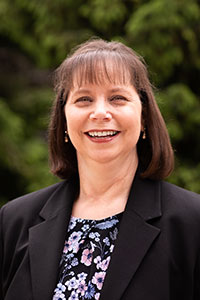
Heidi M. Thompson, MBA, CPMSM, CPCS, FMSP, has worked in the healthcare and the Medical Staff Services field for 37 years. Heidi has worked in academic centers, health systems, community hospitals, and health plans. She also consulted for a large healthcare corporation teaching credentialing and privileging in rural facilities. Heidi served as a NAMSS volunteer for 14 years. She earned the NAMSS Fellow recognition in 2018.
Heidi is currently the System Director at St. Luke’s Health System based in Boise, Idaho. As a transformational leader, Heidi recognizes that it is through the growth and development of those on her teams and serving others that she will leave a legacy. Heidi also enjoys knitting, crocheting, sewing, reading, traveling to new places, and enjoying the great outdoors.
Heidi M. Thompson, MBA, CPMSM, CPCS, FMSP