Members Only | 01.20.26
Outsourcing for Medical Staff Services: Lessons from MSP Leaders
By Teddy Durgin
In recent years, outsourcing has become an increasingly valuable strategy to help medical services professionals (MSPs) who face growing workloads, tighter budgets, and rising complexity. While many organizations outsource similar tasks, the outcomes vary widely. To better understand what drives success, we spoke with two NAMSS members who have been instrumental in leading outsourcing initiatives through to successful implementation.

Daniel Santos
Daniel Santos, CPMSM, CPCS, senior credentialing and onboarding manager at Vituity, says his organization, a leader in acute care management and medical staffing, outsources what he and his colleagues refer to as “preliminary credentialing tasks.” These range from data entry and reference requests to hospital and work history verifications. “Once offshore team members demonstrate proficiency and a strong understanding of our standards,” he says, “they are trained on the recredentialing process and assigned a defined portion of recredentialing files under appropriate oversight.”
Arianne Smith, director of operations at Marlab Locums, says her firm primarily outsources project-based tasks, data entry, and standardized verifications that can be obtained through established online sources and do not require direct interaction.
Why Outsourcing?
Outsourcing allows organizations to manage increasing workloads while maintaining budget discipline, particularly for high-volume, repeatable tasks. Both Santos and Smith concur that this cost efficiency has been the primary driver for their decisions to go the outsourcing route.
During past periods of significant growth, Vituity invested heavily in process improvements, automation, and technology. Volume, though, has always required human support. “As a fiscally conservative organization, we recognized that hiring U.S.-based staff at the same pace as our growth was not sustainable,” Santos says. “Outsourcing allows us to engage highly qualified professionals while maintaining financial responsibility and scalability.”
For Vituity, outsourcing has been transformational. Beyond productivity and quality improvements, it has significantly improved staff well-being. With offshore support, Santos notes, the company’s team increased production by over 20% while reducing overtime, burnout, and turnover.
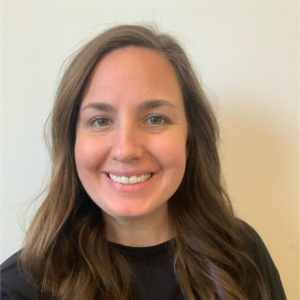
Arianne Smith
The initial challenge for both was to overcome certain misconceptions about outsourcing. “A common misconception is that outsourcing inherently increases the risk of data breaches or information misuse,” Smith says. “In reality, when appropriate safeguards, access controls, and compliance standards are in place, outsourced teams can operate securely and effectively.”
Perhaps the most common misconception is that offshore staff will take jobs. “This fear mirrors concerns often raised about technology, automation, and AI,” Santos says. “When thoughtfully designed, outsourcing does not replace in-house professionals — it supports them, particularly during periods of growth or rapid contract turnaround, allowing internal teams to focus on higher-level, judgment-based work.”
Getting on Board In-House
There is no doubt that outsourcing will impact in-house MSPs and perhaps even team morale. Santos concedes that, initially, there was understandable concern and uncertainty. How did Vituity overcome this hurdle?
“We addressed this through transparency — clearly explaining the rationale, goals, and safeguards around outsourcing,” Santos says. “We were intentional about integrating offshore staff into our culture and team structure so they were viewed as colleagues, not outsiders. As productivity and quality improvements became evident, team confidence grew and morale improved.”
Smith and her colleagues at Marlab Locums were equally thoughtful. The key was for any outsourced team to be perceived as a support layer for U.S.-based staff. “This allows internal teams to focus on higher-level, judgment-based work, which can improve efficiency and reduce burnout,” she says.
Another key is for change management strategies to be implemented thoughtfully, introducing outsourcing while maintaining trust. Santos and Smith insist that successful implementation requires clear vision, transparency, and engagement. Smith recommends involving internal staff in training and oversight to maintain trust and engagement.
Santos adds, “We communicated openly throughout the process, involved key stakeholders, and actively sought feedback. Early wins — such as faster approval for new staff and improved turnaround times to fill roles — helped build confidence and demonstrated the value of the model.”
Other Considerations
Time zone differences should be taken into account when managing outsourced staff. In some cases, they can even be leveraged as an advantage. Marlab Locums’ outsourced team aligns with Mountain Standard Time. Smith says that this allows for real-time collaboration during core business hours while also creating opportunities for extended coverage and task continuity.
Santos says time zone differences have not been a barrier for Vituity as it already operates across multiple U.S. time zones. “We are accustomed to coordinating schedules thoughtfully,” he states. “Our offshore team maintains at least six hours of daily overlap with our core business hours, ensuring continuity and collaboration.”
One of the biggest challenges, though, is factoring in the cultural and operational shift required. After all, outsourcing is not plug-and-play. “There is a learning curve, and early missteps are common,” Santos cautions. “Success requires a willingness to adapt workflows, standardize processes, and commit to training and support. It took time, and it was challenging at first. But once we made those adjustments, results followed.”
Advice and the Future
For those considering outsourcing for the first time, Santos and Smith can offer advice from lived experience. Smith believes patience is essential. “Training typically takes longer than with U.S.-based hires,” she says. “But with structured onboarding and ongoing support, the long-term operational and cost benefits can be significant.”
For Santos, he urges to be patient and methodical. “Analyze your workflows to identify the most time-consuming tasks and determine how they can be broken down,” he says. “Invest time in planning, mapping processes and setting clear expectations. That upfront effort indeed pays dividends in long-term efficiency and sustainability.”
Looking ahead, Smith and Santos foresee outsourcing continuing to shape and reshape the future of medical staff services. “Outsourcing will increasingly serve as a support model that augments medical staff services teams,” Smith says. “By providing reliable assistance with administrative and repetitive tasks, it can help reduce burnout and allow MSPs to focus on complex regulatory, and strategic responsibilities.”
Santos concludes, “I believe outsourcing will play a critical role in the future of medical staff services as organizations seek sustainable ways to manage increasing complexity and demand. Every medical service organization I know requires additional support. When implemented thoughtfully, outsourcing represents a sustainable, scalable pathway to meeting that need.”